

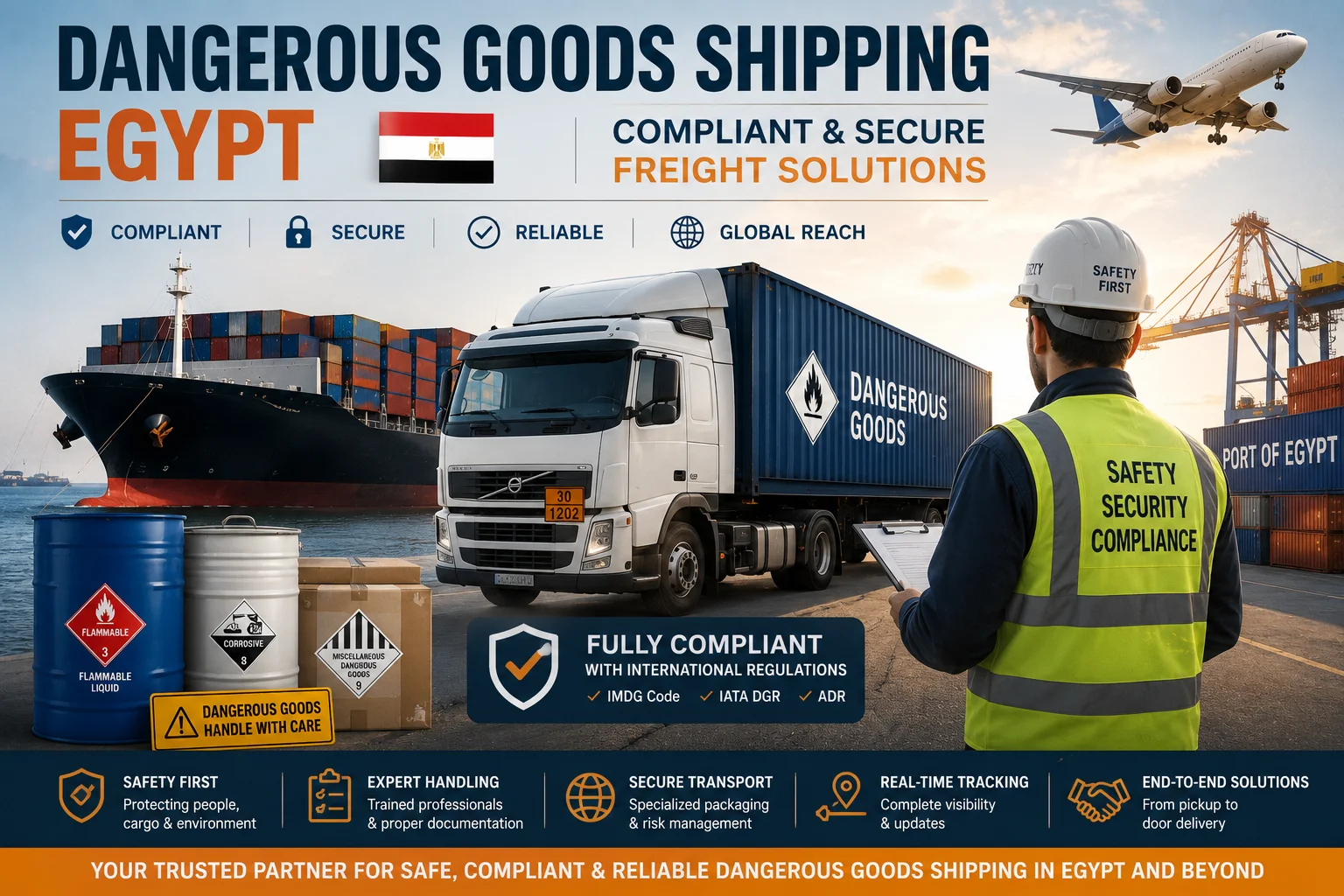
The items you planned to transport normally might be considered dangerous, But don’t worry about dangerous goods shipping Egypt with Freight Club, we’ve got you covered. Continue reading to learn more about what constitutes dangerous items and how to make sure your shipment complies with regulations.
Dangerous goods shipping Egypt refers to the controlled transportation of hazardous materials—such as chemicals, flammable liquids, gases, and lithium batteries—that might endanger people’s health, safety, or the environment while closely abiding by Egyptian legislation and international regulations (IATA, IMO).
The Egyptian Civil Aviation Authority (ECAA) and the Ministry of Interior impose strict standards for air and marine transportation, including special packing, labeling, and paperwork.
read more: Freight Directory Middle East
Important elements of dangerous goods shipping Egypt include:
These goods are handled by reputable specialist logistics firms in Egypt, guaranteeing proper handling, storage, and transportation.
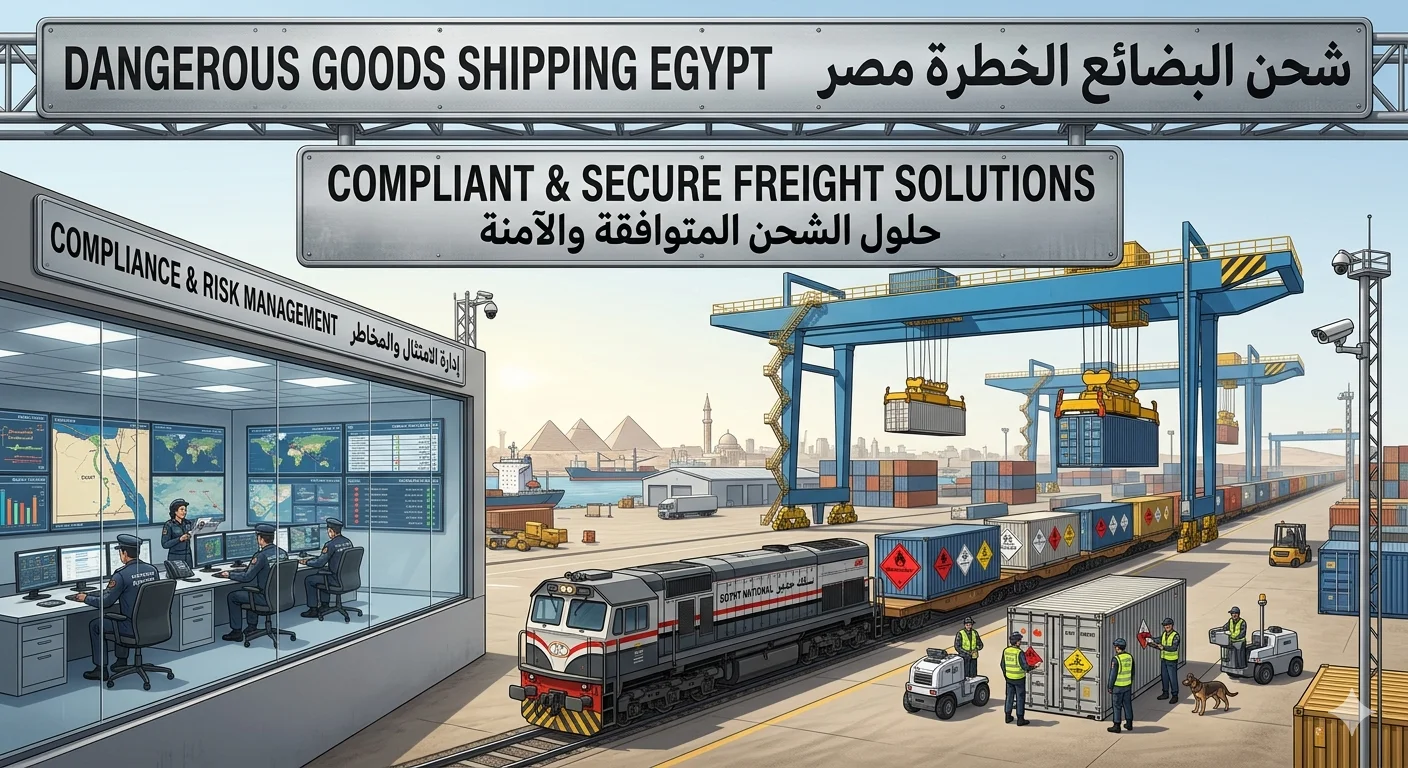
Freight Club delivers wherever you are. Through our reliable worldwide network, we conduct business in many different nations and areas.
Discover the locations we serve and take advantage of our dangerous goods shipping Egypt and flawless logistics services from pickup to delivery.
All done quickly, securely, and carefully.
What paperwork is needed to export hazardous materials?
The Safety Data Sheet (SDS), formerly known as the MSDS, is the most important document. It offers comprehensive details on the chemical characteristics, risks, and safety measures. For customs and carrier compliance, a Dangerous Goods Declaration (DGD) and appropriate business invoicing are also necessary.
read more: Chartering Agent Egypt
Is it possible to send lithium batteries by air freight?
Yes, but only under very specific conditions. Class 9 hazardous products include lithium batteries. IATA requirements, which outline the battery type (ion or metal), capacity (watt-hours), and whether they are delivered alone or with equipment, must be followed while packaging them.
How are the expenses of delivering hazardous materials determined?
DG often has greater shipping costs than regular cargo because of: