
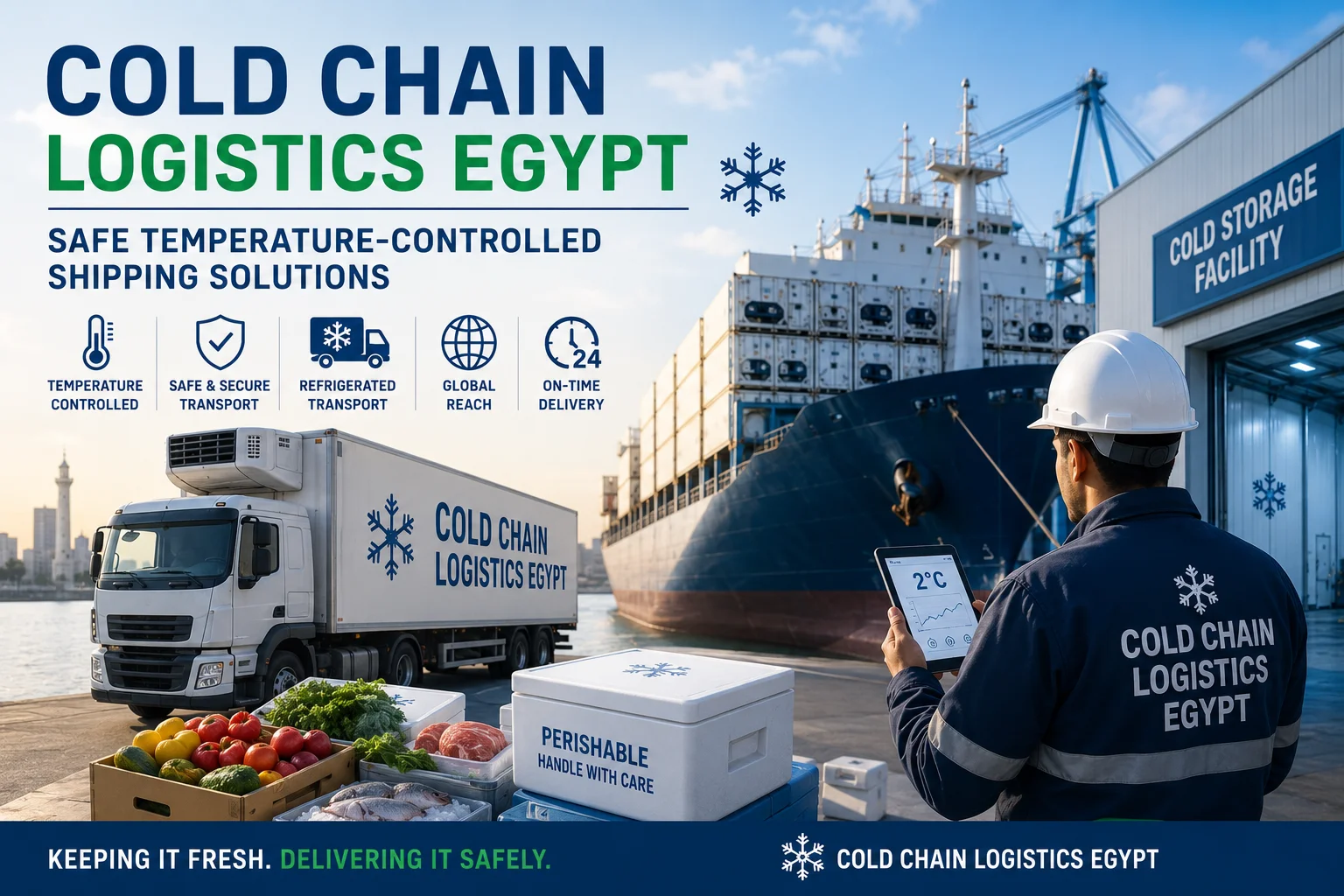
Cold chain logistics Egypt is a specialized supply chain management system that transports and stores delicate goods, including food, medications, and chemicals, using temperature-controlled equipment like trucks, refrigerated warehouses, and specialized packaging. From the point of origin to the point of destination, it adheres to a rigorous, uniform temperature range to avoid spoiling, deterioration, or potency loss.
For temperature-sensitive items to remain safe and of high quality, cold chain logistics Egypt are crucial. Businesses may guarantee that their products stay secure and efficient along the supply chain by comprehending and putting into practice the essential components of cold chain logistics.
For shipping and logistics, cold chain logistics is essential. Maintaining the proper temperatures throughout the supply chain it maintains temperature-sensitive products are safe and fresh. It stops deterioration, spoiling, and health hazards from inappropriate transportation or storage.
For many sectors, especially those that deal with perishable commodities, maintaining temperature control is crucial. An extensive review of cold chain logistics is given in this article. It discusses its definition, essential elements, advantages, and use in various sectors.
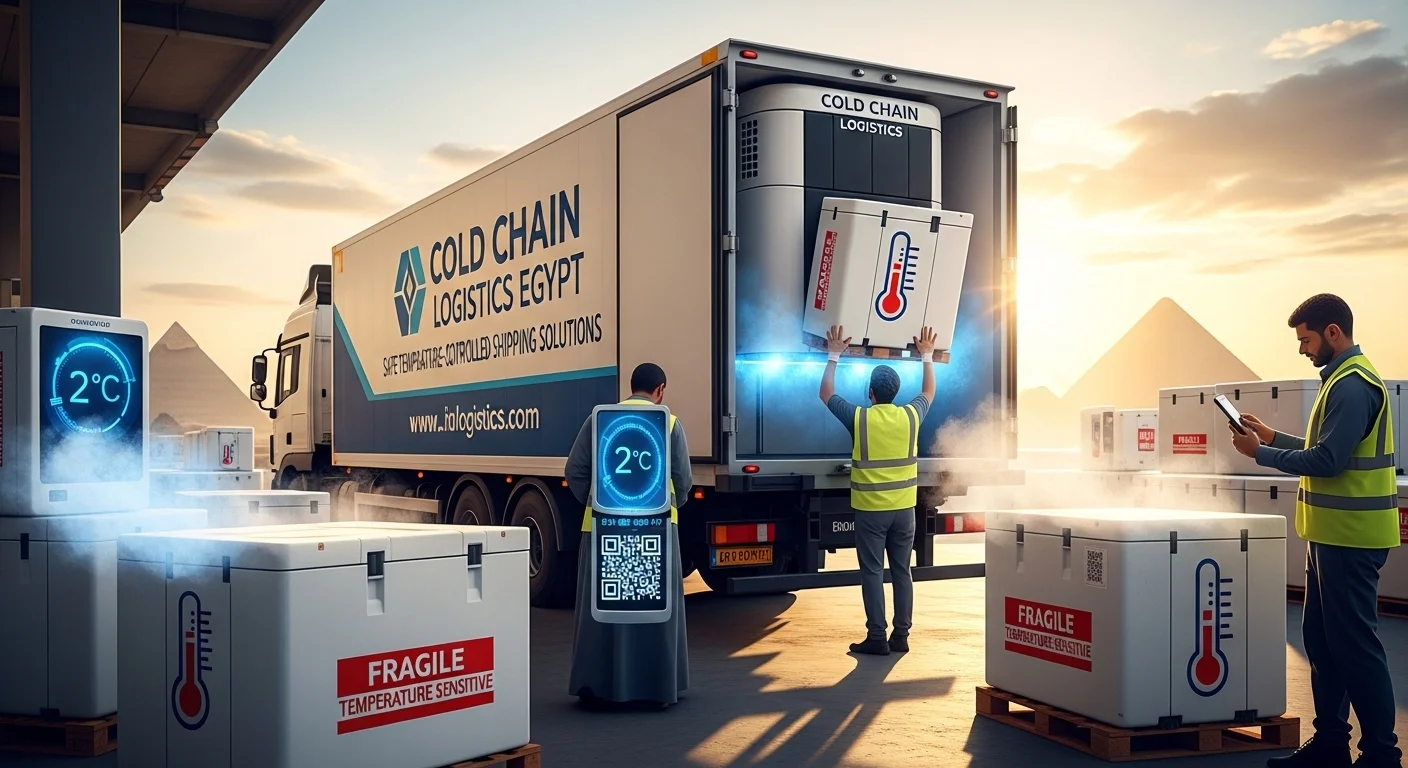
Freight Club ensures that cold chain logistics operations in Egypt follow a carefully controlled process to keep products within the required temperature range throughout the entire supply chain. This system involves multiple stages, monitoring procedures, and transportation controls designed to maintain product quality, safety, and compliance from storage to final delivery.
As soon as the product is produced, harvested (for crops), or killed (for livestock), the process starts. The product has to be quickly cooled to the desired temperature at this stage. For instance, in the food business, fish and meat are often put in cold storage as soon as they are harvested.
Milk is pasteurized and chilled after being milked. This early chilling stops germs from growing and gets the product ready for preservation. Similar to this, many heat-sensitive medications are first kept in special freezers or refrigerators during the pharmaceutical production process.
Products are kept in cool rooms or warehouses after processing, including cold chain logistics Egypt. These buildings have refrigeration systems that keep the temperature steady and are constructed with insulating materials. Thermometers or automated systems must be used to regularly monitor warehouse conditions so that any discrepancies can be found and fixed right away.
After being stored, the product is carried in vehicles that are specifically designed to maintain the necessary temperature, such as vans, insulated containers, or refrigerated trucks.
These cars have independent refrigeration systems that can chill the cabin regardless of the outside weather, as well as thermal insulation in the ceiling, floor, and walls. Additionally, they have sensors or recorders installed to track the temperature in real time.
Arriving at distribution centers, retail stores, or other sites of sale is the last phase of cold chain logistics Egypt. In order to return the items to chilled chambers or suitable display units, unloading staff must move quickly. For example, fresh items are kept in chilled display cabinets in supermarkets, whereas frozen goods are put straight into commercial freezers.
In the lack of tiny refrigerated trucks, last-mile supplies (such as fresh food deliveries to houses or vaccinations to rural clinics) may also fall under this stage. In these situations, portable insulated containers must be employed.