


Port charges and demurrage and detention fees are key cost factors in international container shipping. When containers exceed their permitted time at ports, terminals, or customer facilities, additional charges can significantly increase shipping expenses.
Understanding these costs enables businesses to plan shipments efficiently, control logistics budgets, and avoid unnecessary penalties.
Freight Club helps you minimize these costs by connecting with logistics providers and supporting more efficient shipment planning, timely customs clearance, and better coordination with shipping lines.
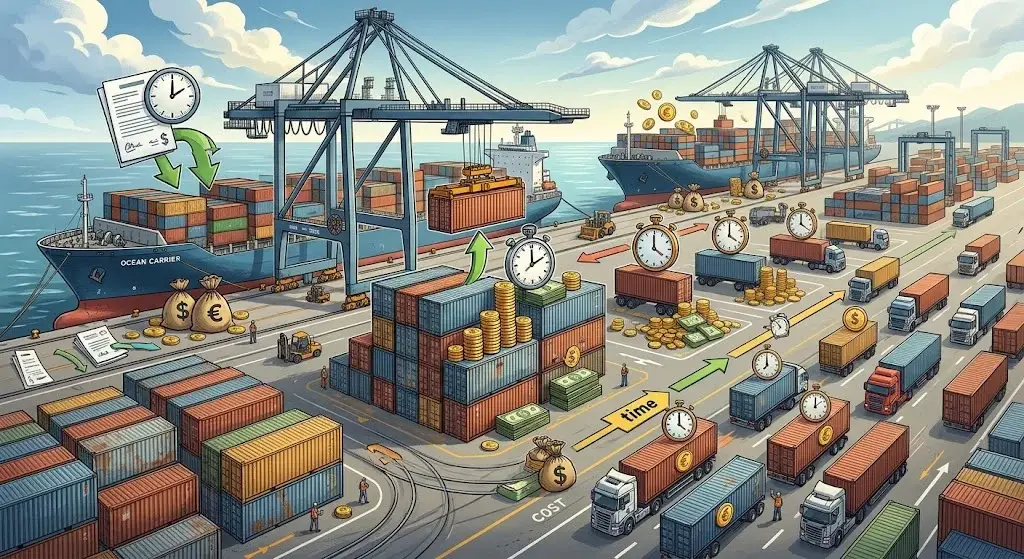
Port charges cover the costs of services provided at seaports and container terminals. Depending on the shipment and contractual terms, these fees may be paid by the shipper, consignee, or another responsible party.
Common port charges include:
Demurrage and detention charges apply when containers exceed their permitted free time. Their calculation varies by shipping line, container type, port regulations, and contractual terms.
Demurrage and detention are container charges that apply at different stages of shipping.
Demurrage is typically charged when a container remains inside the port or terminal beyond the permitted free time, often due to customs delays or late collection.
Detention applies when a container remains outside the terminal beyond the allowed period, usually because of delayed unloading or empty-container return.
| Location | Inside the terminal | Outside the terminal |
| Main cause | Delayed container collection | Delayed empty-container return |
| Prevention | Expedite customs clearance and collection | Arrange timely unloading and return |
Port storage costs increase when containers remain at terminals beyond the permitted free time. Common causes include:
Registration in Freight Club enables you to connect with logistics providers and customs brokers, helping you coordinate shipments efficiently, meet deadlines, and minimize port charges and demurrage and detention fees.
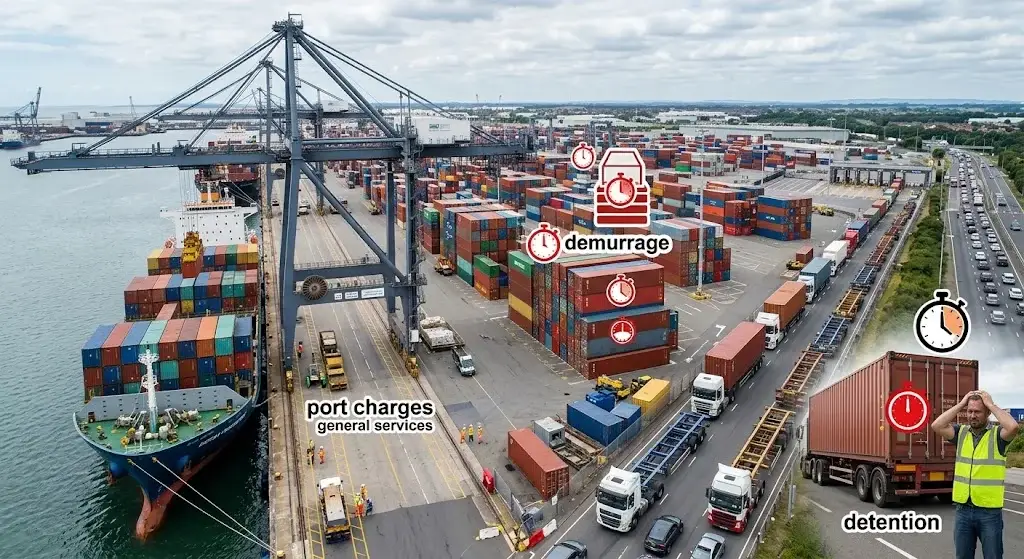
Free time is the period during which a container can be used or remain in a specified location without incurring demurrage or detention charges. Shipping lines set free-time allowances based on their tariffs, contracts, and service conditions.
Before a shipment arrives, businesses should confirm:
Efficient customs clearance helps prevent cargo delays and reduce additional shipping expenses. Businesses can streamline the process by:
Freight Club platform is designed to support early preparation and effective coordination by connecting businesses with logistics providers, helping them minimize port charges and demurrage and detention fees.
Our platform helps businesses discover and connect with logistics service providers, including freight forwarders, customs brokers, shipping lines, trucking companies, and warehousing operators. Freight Club simplifies the search for suitable logistics partners across Egypt, Saudi Arabia, the UAE, and international markets, helping businesses find providers that match their shipping needs and geographic requirements.
The directory can help businesses:
Freight Club invites freight forwarders, shipping companies, customs brokers, and logistics professionals to register for free and increase their online visibility.
Create a company profile to showcase your services, coverage, and contact details to potential customers worldwide.
By joining Freight Club, logistics providers can work toward the following business objectives:
Register your company for free through the Freight Club website and take a practical step toward expanding your professional network and reaching potential customers.
Demurrage charges apply when containers remain inside the port terminal beyond the allowed free time, whereas detention fees apply when containers are held outside the port and returned late to the carrier.
By pre-clearing customs documentation, tracking container milestones in real time, and coordinating promptly with freight forwarders for immediate cargo pickup and return.
Freight Club provides a comprehensive directory connecting cargo owners, importers, and businesses directly with pre-vetted freight forwarders and maritime service providers.
A: Joining is simple! Submit your company profile and service offerings to our directory to gain massive visibility in front of global shippers seeking reliable transport partners.”
Managing port charges and demurrage and detention fees requires accurate documentation, timely customs clearance, effective transport planning, and clear communication with shipping lines. Businesses should confirm free-time allowances, monitor shipment deadlines, arrange prompt container collection, and review carrier tariffs to avoid unnecessary expenses.
Freight Club helps businesses discover logistics providers and potential partners across regional and international markets. With proactive planning and reliable professional connections, importers and exporters can control shipping costs, improve supply chain efficiency, and protect their budgets.
Words: 1
Characters: 7