


Pricing is everything in sea freight. Whether you are quoting a client or evaluating a supplier, understanding freight cost per kg Egypt gives you a real edge in negotiations and budget planning. Rates fluctuate constantly based on multiple variables knowing what drives them helps you make smarter, faster commercial decisions.

Freight cost per kg is never a fixed number. Several variables push rates up or down:
hazardous or oversized cargo costs more
Alexandria, Damietta, and Port Said each carry different handling fees
FCL, LCL, or breakbulk pricing structures differ significantly
direct services cost more than transshipment routes
peak trade seasons drive freight cost per kg noticeably higher
fluctuate monthly based on global bunker prices
EGP volatility directly impacts landed cost calculations
For LCL shipments, freight cost per kg Egypt typically ranges between USD 0.08 and USD 0.25 per kg depending on origin, carrier, and current market conditions.Always request all-inclusive quotes covering origin charges, ocean freight, and destination handling to avoid hidden cost surprises.
FCL pricing shifts to a per-container model rather than per kg, making freight cost per kg Egypt calculations more favorable for heavy, dense cargo exceeding 10 tonnes per container.
Mastering freight cost per kg Egypt benchmarks gives sea freight professionals a powerful tool for accurate quoting, competitive pricing, and smarter carrier selection. Rates shift constantly always request fresh quotes, compare multiple carriers, and factor in all surcharges before presenting final numbers to clients.
Businesses that understand exactly what drives freight cost per kg Egypt negotiate better rates, protect margins, and build stronger commercial relationships across every trade lane they operate.
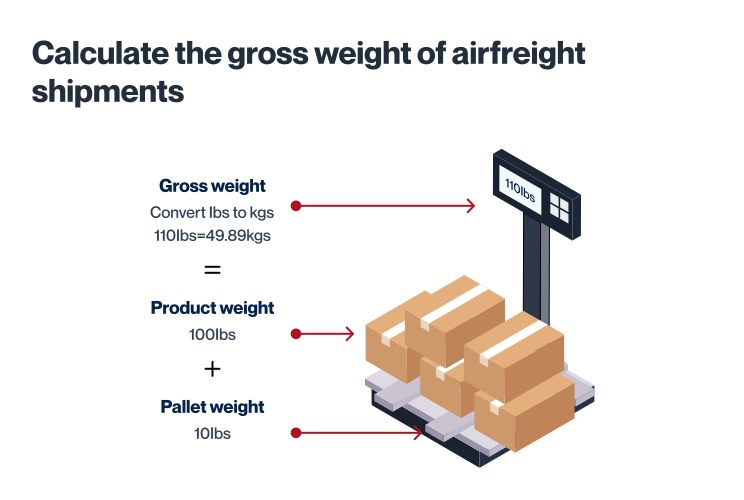
LCL sea freight charges apply either actual weight or volumetric weight whichever is greater. Carriers measure your cargo dimensions in centimeters, then calculate volumetric weight using this formula:
Length × Width × Height ÷ 6,000
The result is compared against the actual cargo weight. Whichever number is higher becomes the chargeable weight and that is what you pay for. Always measure your cargo accurately before requesting a quote to avoid unexpected cost differences at the time of shipment booking.
Yes. Origin handling, destination terminal handling (THC), customs clearance fees, documentation charges, and fuel surcharges all add to the base freight rate. Always request a complete all-in quotation before confirming any shipment.
Consolidating shipments to maximize container utilization, booking in advance during off-peak seasons, comparing multiple carrier quotes, and working with an experienced freight forwarder who has strong carrier relationships all reduce effective freight cost per kg meaningfully.