

Customs clearance in Egypt is essential for import and export shipments, covering documentation, HS classification, customs valuation, inspection, duties, and cargo release. Proper preparation helps reduce delays, additional costs, and documentation issues.
Freight Club helps businesses find and connect with freight forwarding and logistics companies for commercial and industrial shipments through Egyptian ports and airports.
Early coordination allows shipment documents, permits, ACI requirements, and other customs-related information to be reviewed before cargo reaches Egypt, helping businesses prepare for the customs clearance process.
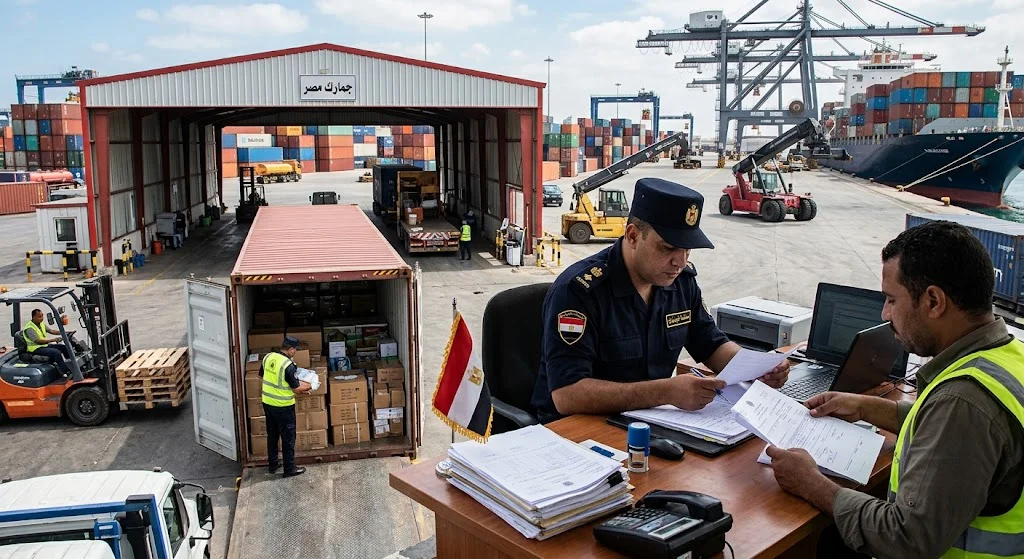
Customs clearance in Egypt is the process of declaring goods to Egyptian Customs, submitting required documents, completing HS classification and customs valuation, undergoing inspection when required, paying applicable duties and taxes, and obtaining cargo release.
The process applies to imports and exports and may include final import, export, temporary admission, transit, and other customs regimes. Requirements vary according to the cargo, classification, intended use, shipping method, and applicable regulations.
Effective customs clearance starts before shipment arrival. Reviewing the commercial invoice, packing list, transport documents, permits, and ACI information in advance helps identify and correct discrepancies early.
The process generally includes pre-shipment document review, ACI and Nafeza readiness, customs declaration, classification and valuation, inspection follow-up, and release coordination.
Freight Club helps individuals and companies to explore providers offering customs clearance and related logistics services across Egyptian ports and airports.
Through Freight Club, you can explore logistics companies and customs clearance providers based on their services and specific shipping requirements, while gaining a clear understanding of the key stages typically involved in the customs clearance process, including:
Customs clearance operations covered in the provided material include:
Port clearance is not necessarily identical across every location. Cargo type, shipment method, terminal operations, inspection requirements, and delivery arrangements can affect the practical workflow.
A professional customs clearance service can assist with:

Customs Clearance in Egypt
Accurate and consistent documentation is essential for smooth customs clearance in Egypt. The main documents typically required include:
Import customs clearance in Egypt involves regulatory and electronic procedures governed by applicable customs requirements, with ACI and Nafeza playing a central role in the pre-arrival process for commercial imports.
ACI (Advance Cargo Information) requires shipment data to be submitted before loading, after which an ACID number is generated through Nafeza, Egypt’s national single-window platform for customs procedures. ACI has applied to maritime imports since October 2021 and became mandatory for air freight from January 1, 2026, subject to applicable exceptions.
The ACID number is a unique 19-digit shipment identifier that must be correctly reflected on key shipping documents, including the Bill of Lading and Commercial Invoice.
Common ACI and Nafeza issues include late submission, inconsistent shipment details, incorrect supplier information, missing ACID data, and differences in cargo weight, value, or description. Importers should provide ACID information to overseas suppliers early to ensure consistency across all relevant documents.
Accurate and consistent documentation is one of the foundations of customs clearance in Egypt. For most imports, the core file includes the commercial invoice, packing list, bill of lading or airway bill, certificate of origin where required, and cargo-specific permits or approvals.
The commercial invoice is used as a basis for customs valuation and duty calculation. It should accurately identify the buyer, seller, goods, value, currency, invoice number, weight, and package information.
The source also recommends including the HS code for each article and ensuring that the total weight and number of packages correspond with the other shipping documents.
The packing list should provide accurate information about quantities, weights, dimensions, package composition, and marks. Its details must remain consistent with the commercial invoice and transport documents.
The bill of lading is used for sea freight, while the airway bill applies to air cargo. Transport documentation should correspond with the commercial file, consignee details, shipment references, and actual routing.
A certificate of origin may be required depending on the cargo, origin, applicable trade treatment, or other requirements. Proof of origin may also be required when preferential or reduced customs duties are applicable.
Some products require additional documentation before customs can complete the release process. Depending on the cargo, this can include:
One of the most common sources of customs problems is inconsistency between documents. Invoice, packing list, transport document, ACI information, and permits should accurately describe the same shipment.
Differences in quantities, weights, values, descriptions, or shipment references can lead to additional questions, corrections, or delays.
Customs Clearance in Egypt delays can increase exposure to storage, handling, and other operational costs. The provided material explains that documentation problems can extend storage time, delay declaration work, and require repeated corrections between importers, suppliers, carriers, banks, and customs parties.
Freight Club can position customs and freight coordination around early shipment preparation by helping businesses identify and connect with logistics and customs service providers before cargo arrives.
Customs Clearance in Egypt process should begin before the shipment reaches the port. Reviewing documents early provides time to correct discrepancies and address missing information before the cargo enters the customs workflow.
ACI preparation should begin as soon as the commercial terms and cargo details are established. Late ACI work can create supplier coordination problems and affect shipment readiness.
Customs release is only one part of the shipment journey. Inland transportation, receiving windows, and final delivery planning should be coordinated with the expected customs release timeline.
Common situations that can increase operational cost include:
By connecting businesses with appropriate freight forwarding, customs brokerage, and logistics providers, Freight Club can help businesses organize the information required to plan their shipments and select suitable service providers.
process of Customs Clearance in Egypt can be divided into a series of connected stages. Preparing each stage in advance helps maintain consistency throughout the shipment.
process of Customs Clearance in Egypt starts with an accurate description of the cargo and the appropriate Harmonized System code. HS classification is important because it supports the determination of applicable duties and taxes.
Product descriptions should be specific and should provide sufficient information about the goods, including what they are made of and how they will be used where relevant.
Prepare the commercial invoice, packing list, transport document, certificate of origin where required, permits, approvals, and other applicable documentation.
All documents should contain consistent shipment information.
For applicable imports, shipment information is submitted through the ACI process and the resulting ACID information is incorporated into the required documents before loading.
The customs declaration is prepared and submitted through Nafeza according to the relevant customs regime, which may include final import, export, temporary admission, or another applicable procedure.
Customs authorities may release the cargo based on the submitted file or select the shipment for examination. Inspection may involve physical examination, sampling, or documentation review.
Applicable customs duties, VAT, and other charges are settled according to the shipment’s classification, declared value, and applicable requirements.
Once the required procedures and payments are completed, customs release is coordinated and the shipment can proceed to its next inland logistics stage.
Customs duties and import taxes in Egypt depend primarily on the classification and declared value of imported goods. Additional charges may apply depending on the cargo and clearance requirements.
There is no single fixed cost for Customs Clearance in Egypt. The final amount depends on factors such as:
Customs Clearance in Egypt requires accurate documentation, timely preparation, and coordinated logistics. Freight Club, a dedicated freight and logistics directory, helps businesses discover suitable providers for their shipping needs.
Customs clearance is the process of declaring goods to Egyptian Customs, submitting the required documents, completing classification and valuation, undergoing inspection where applicable, paying duties and taxes, and obtaining cargo release.
The provided material states that standard containers with a complete and pre-verified electronic file typically clear in 2–5 business days, assuming there are no compliance flags. Missing documents, pending permits, classification or valuation questions, and inspection holds can extend the timeline.
The core documents for most imports include the commercial invoice, packing list, bill of lading or airway bill, certificate of origin where required, and applicable permits or approvals. ACI-related information, including the ACID number, is also required for applicable shipments.
Words: 1
Characters: 8