


Cargo insurance terms explained is one of the topics every importer, exporter, and freight forwarder should understand before purchasing cargo insurance. Through Freight Club, companies across Egypt, Saudi Arabia, and the UAE can compare insurance providers while gaining a clearer understanding of the coverage options that best protect international shipments.
Moreover, understanding cargo insurance terms explained helps businesses avoid costly misunderstandings, compare insurance policies with confidence, and choose coverage that matches the value and risk level of every shipment. Better decisions today can reduce unexpected expenses and strengthen long-term supply chain protection.

Choosing cargo insurance without understanding policy terminology often leads to unnecessary costs or insufficient protection. Companies may purchase coverage that doesn’t reflect the actual risks facing their shipments, resulting in unexpected financial losses when claims are submitted after transportation incidents.
In addition, learning the all risk insurance meaning and other essential insurance concepts allows importers and exporters to compare policies more effectively. Understanding cargo insurance terms explained also helps businesses negotiate suitable protection while avoiding unnecessary premiums for benefits they may not require.
All-risks coverage is considered one of the most comprehensive forms of cargo protection, as it covers many accidental causes of physical loss or damage during transit. However, the policy does not automatically provide protection against every possible scenario, and specific exclusions always apply.
In addition to this, understanding the meaning of all-risk insurance is an important part of cargo insurance terms explained and requires a careful review of the insurance policy before purchasing coverage.
Losses resulting from inadequate packaging, normal wear and tear, hidden defects, or willful misconduct are typically excluded, making it essential to understand the terms of the insurance policy before each shipment.
FPA WA cargo insurance terminology can be confusing for companies unfamiliar with marine insurance. Free of Particular Average (FPA) generally provides limited protection by covering gross losses resulting from major incidents rather than minor or partial cargo damage during normal transportation.
Although FPA policies often reduce insurance costs, they may leave businesses exposed to losses that broader coverage would include. Understanding cargo insurance terms explained alongside FPA WA cargo insurance helps businesses choose the appropriate level of protection based on shipment value, transportation risks, and operational requirements.
Read more: Insurance for Goods
Unlike FPA, With Average (WA) coverage protects against partial cargo losses caused by covered risks during transportation. This option offers broader protection while remaining more affordable than comprehensive policies, making it suitable for many commercial shipments with moderate risk exposure.
Additionally, understanding FPA WA cargo insurance is an important part of cargo insurance terms explained because it helps companies compare coverage levels before purchasing a policy. Choosing the right option depends on cargo value, transportation methods, and the financial impact that partial losses could have on overall business operations.
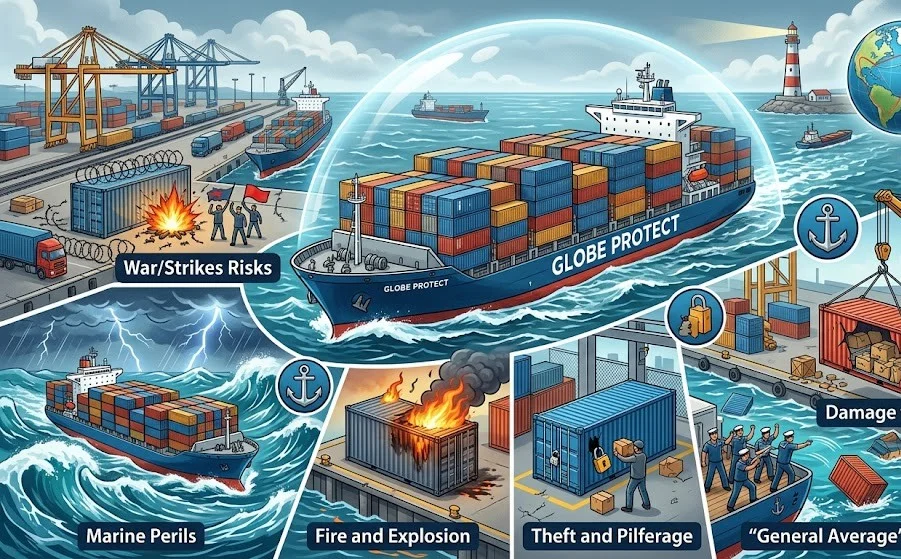
The principle of general average shipping applies when extraordinary actions are taken to protect a vessel and its cargo during a serious emergency. In these situations, all parties benefiting from the action share the resulting financial loss, even if their individual cargo remains undamaged.
In addition, understanding this concept helps importers prepare for unexpected costs during international shipments. Choosing appropriate insurance ensures companies receive financial protection when General Average contributions become necessary under maritime law and commercial shipping practices.
Institute Cargo Clauses define the level of protection provided by marine cargo insurance policies. Clause A offers the broadest coverage, while Clauses B and C insure against a more limited range of specifically listed risks.
Furthermore, understanding these clauses makes cargo insurance terms explained easier to apply when comparing policies. Reviewing the scope of each clause allows companies to match insurance protection with shipment value, transportation routes, and operational risk before cargo begins its journey.
Every cargo insurance policy includes pricing terms that directly affect both coverage and claim payments. The premium represents the cost of the insurance, the deductible is the amount paid by the insured before compensation applies, and the sum insured defines the maximum financial protection available.
To put it simply, understanding these pricing elements helps businesses compare policies more accurately instead of focusing only on the lowest premium. Selecting balanced coverage improves financial protection while supporting better long-term risk management for international shipments.
Choosing the right cargo insurance depends on the shipment’s value, transportation route, cargo type, and potential risks throughout transit. Businesses should evaluate policy exclusions, coverage limits, and claim conditions before selecting an insurance solution that fits their operational requirements.
Working with experienced insurance providers also simplifies the decision-making process. Through Freight Club, businesses can compare trusted insurers, better understand cargo insurance terms explained, and choose coverage that supports safe and cost-effective international trade across Egypt, Saudi Arabia, and the UAE.
All Risk provides broader protection against accidental loss or damage, while FPA offers more limited coverage for major incidents and excludes many partial losses.
Yes. Under general average shipping principles, all cargo owners benefiting from emergency actions may be required to share the resulting costs.
FPA is generally the least expensive option because it provides more limited protection than WA or All Risk coverage.
The core insurance terms are internationally recognized, although policy wording and local insurance regulations may vary between countries.
Understanding cargo insurance terms explained helps businesses choose suitable coverage, control insurance costs, and reduce financial risk. Visit Freight Club to compare trusted cargo insurance providers and find solutions tailored to your international shipping needs across Egypt, Saudi Arabia, and the UAE.
Learn more: