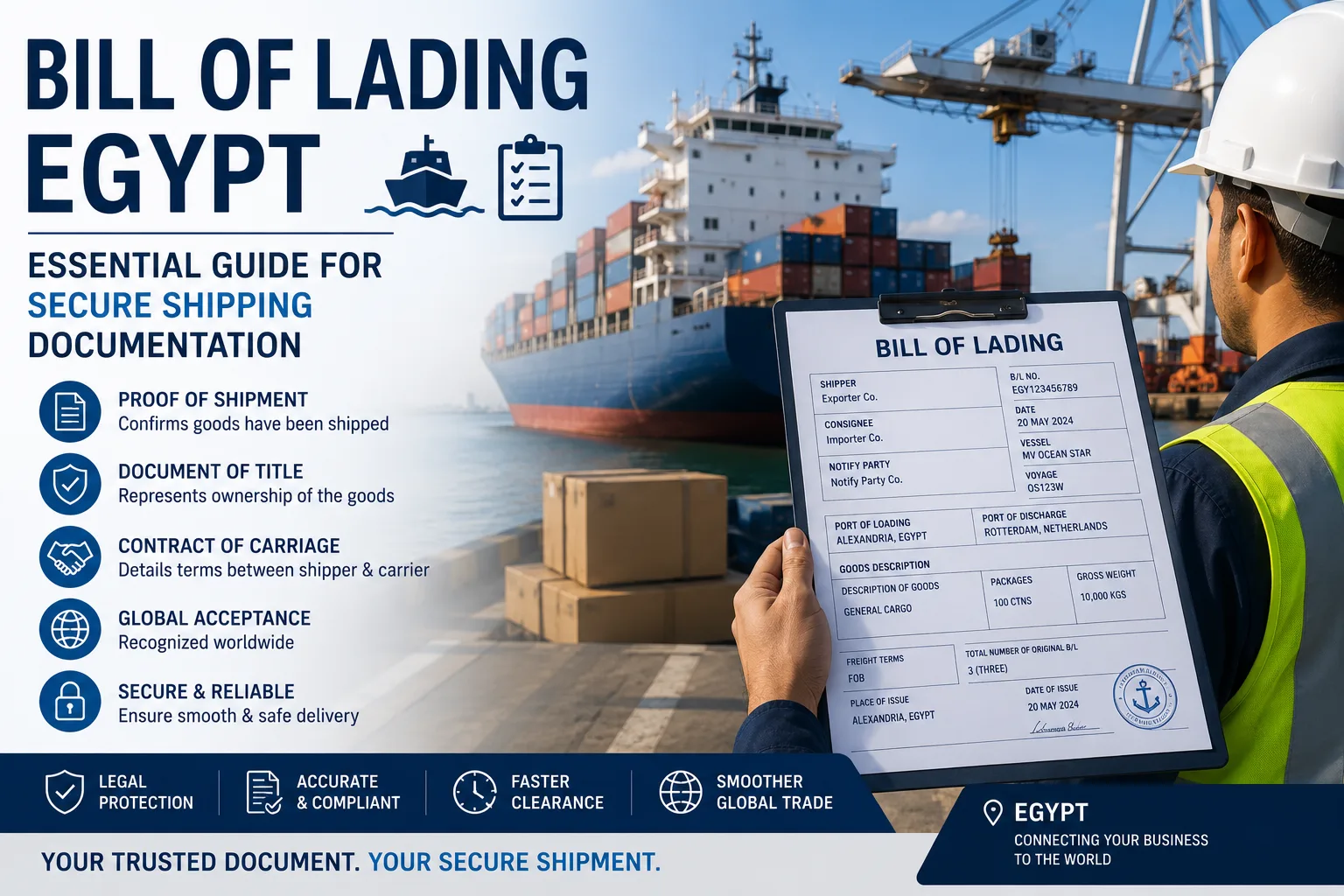
Bill of Lading Egypt Essential Guide for Secure Shipping Documentation
0 comments
1 month ago
Logistics
An essential document for shipping and logistics is a bill of lading Egypt (B/L). It is a multipurpose instrument that works as proof of contract, enables the transportation of goods, and offers legal protection. Are you prepared to learn? Now let’s begin.
Bill of lading Egypt
A Bill of Lading (B/L) in Egypt is a mandatory legal document issued by a carrier to a shipper, confirming the receipt of cargo and outlining the terms of carriage. It functions as a contract, a receipt, and a title to the items. As part of the Advance Cargo Information (ACI) system, every maritime freight to Egypt must submit a digital bill of lading (B/L) using the Freight Club platform.
Key Aspects of Bills of Lading in Egypt:
Mandatory ACI System: Importers must obtain an Advance Cargo Information Declaration (ACID) number, which must be displayed on the Bill of Lading at least 48 hours before shipment departure.
Electronic Requirement: Exporters must register and be validated in order to use Freight Club for electronic filing (eBL) starting.
Important Information: For customs clearance, the B/L must contain the ACID number, shipper/consignee information, and thorough cargo descriptions.
Bill Types:
The shipping line issues the Master Bill of Lading (MBL) to the freight forwarder.
Seaway Bill: Often utilized with reliable partners, this non-negotiable option allows for quicker cargo discharge.
Inaccurate B/L submission to Egyptian customs may result in major delays, expensive demurrage, or the exporter having to pay for the return of the goods.
Primary types of bills of lading
Types of Bill of lading Egypt:
Bill of Lading Original (OBL)
The conventional paper record.
Important Features:
Typically, three original copies are released
Cargo release requires a physical presentation
Typical in deals involving Letters of Credit
Considered negotiable
Dangers:
Cargo release becomes complicated legally if it is lost.
needs an international courier
High risk of arrival delay before documents
Ideal For:
Shipments under bank oversight
First-time trade relationships
High-value cargo
L/C exchanges
Express Release, or Telex Release
No physical original document is required.
The consignee can accept cargo at the destination without providing paper documentation if the shipper surrenders the original B/L at the point of origin
Benefits of bill of lading Egypt
Quicker release of cargo
No courier delay
Reduced cost of documentation
Reduced port storage risk
Ideal for Imports from Egypt:
Frequent shipments from the manufacturer
Reliable vendors
Transactions outside of banks
Raw material imports
Telex Release is quicker and safer for the majority of factories that import to Egypt
The sea waybill
Like Telex Release, but non-negotiable.
When Used:
High levels of trust between the seller and the buyer
No resale of products while in transit
Direct business partnership
When items are at sea, ownership transfers are not permitted
bill of lading Egypt that is negotiable
By endorsement, ownership can be transferred bill of lading Egypt.
Common in:
Trading commodities
Triangular trade
Shipments under bank oversight
Operations for Letters of Credit
This allows cargo to be sold during transit
Only the designated consignee is granted access to the cargo