


Air cargo rates per kg are an important factor when estimating the cost of international air shipping. Rates vary based on the route, chargeable weight, cargo volume, urgency, fuel surcharges, and additional handling services.
Freight Club is a dedicated directory for freight and logistics companies, helping businesses find suitable shipping providers and explore available air freight services. It makes it easier to connect with logistics companies and request competitive, shipment-specific rates based on cargo and delivery requirements

Air cargo rates per kg
Understanding air cargo rates per kg is essential for businesses planning international air shipments. Pricing depends on chargeable weight, route, cargo characteristics, service level, available capacity, and additional logistics charges.
Air freight rates are not fixed and can fluctuate based on market conditions, fuel costs, routing, and shipment requirements. Businesses should also consider fuel and security surcharges, handling, documentation, customs clearance, pickup, delivery, and storage when estimating the total shipping cost.
Air cargo rates per kg depend partly on how the shipment’s weight is calculated. Understanding the difference between actual, volumetric, and chargeable weight helps businesses estimate air freight costs more accurately. The following table highlights the key differences and their impact on air cargo pricing.
| Weight Type | Definition | Role in Air Freight Pricing |
|---|---|---|
| Actual Weight | The physical weight of the packed shipment. | Used for comparison with volumetric weight. |
| Volumetric Weight | Weight calculated based on the shipment’s dimensions and space occupied. | May determine the charge when it exceeds actual weight. |
| Chargeable Weight | The applicable weight used by the carrier for rate calculation. | Usually the higher of actual or volumetric weight, subject to carrier rules. |
Example: 60 × 40 × 50 cm | Actual weight: 12 kg Volumetric weight: 20 kg (120,000 ÷ 6,000) | Chargeable weight: 20 kg Based on the higher applicable weight. |
Global air cargo pricing trends are shaped by several factors that can cause rates to vary between shipments. Key considerations include:
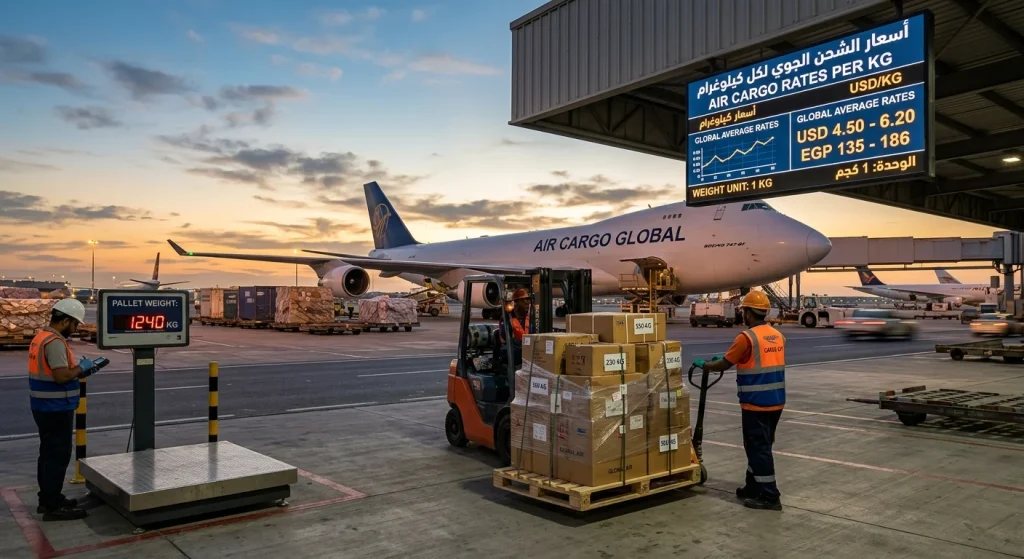
Air cargo rates per kG
The advertised air cargo rate per kg does not always reflect the total cost of air transportation. A freight quotation typically combines the base airline rate with additional charges, including fuel surcharges and terminal handling fees, which can significantly affect the final shipping cost.
Fuel surcharges allow carriers to account for fluctuations in aviation fuel costs and may vary depending on the carrier, shipping route, and pricing structure. Through Freight Club, businesses can compare freight quotes and determine whether fuel surcharges are included in the quoted rate or charged separately.
Security-related charges may also apply to air cargo. These can be associated with cargo screening and security procedures required before transportation.
Terminal handling charges cover services associated with processing cargo at the airport or cargo terminal. Depending on the shipment and service scope, additional charges may include:
The choice between express and standard air freight depends primarily on the shipment’s urgency, cargo characteristics, routing, and budget.
| Factor | Standard Air Freight | Express Air Freight |
|---|---|---|
| Delivery speed | Typically longer | Typically faster |
| Pricing | Generally lower | Generally higher |
| Capacity | Subject to routing and availability | Often prioritized |
| Handling | Standard cargo process | Priority handling may apply |
| Best suited for | Planned shipments | Time-sensitive cargo |
| Booking requirements | Standard advance planning | Often shorter cut-off times |
Air cargo rates per kg vary by service level, route, chargeable weight, capacity, and delivery requirements, with standard and express services offering different pricing and transit times.
Finding competitive air cargo rates per kg requires comparing shipment-specific quotations from suitable freight providers. Through Freight Club, individuals and businesses can discover logistics companies and freight forwarders across the Middle East and North Africa, making it easier to identify suitable providers and request accurate quotes.
Estimating air cargo rates per kg requires comparing complete quotations, including weight, surcharges, handling, customs, and delivery costs. Freight Club helps businesses discover logistics providers and compare suitable options.
To work out the chargeable weight of your own boxes before you ask for a quote, use our free freight rate calculator.
Air cargo rates per kg are typically based on the chargeable weight, shipping route, cargo characteristics, service level, and applicable surcharges and handling fees.
Actual weight is the physical weight of the packed shipment, while chargeable weight is generally the higher of the actual or volumetric weight, depending on the carrier’s pricing rules.
Additional costs may include fuel and security surcharges, terminal handling, documentation, customs clearance, storage, pickup, delivery, and special handling fees.
Freight Club helps businesses discover freight forwarding and logistics companies across the Middle East and North Africa and connect with potential providers for shipment-specific quotations.