The ACID Number is a key reference in Egypt’s Advance Cargo Information (ACI) system. It links the Egyptian importer’s shipment registration on NAFEZA with the documents submitted by the foreign exporter through CargoX.
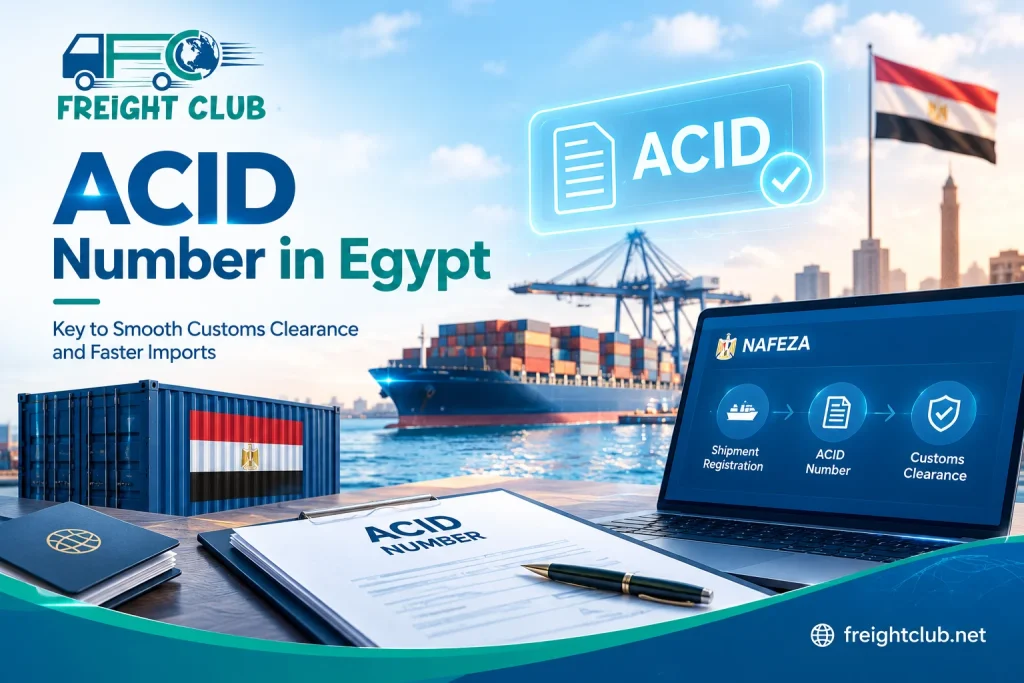
ACID stands for Advance Cargo Information Declaration. It is a unique 19-digit number issued by Egypt’s customs platform, NAFEZA, after the importer registers the shipment. It links ACI data and documents to the correct shipment.
NAFEZA also provides an electronic service to verify an ACID Number using the ACID, importer tax ID, exporter registration details, and exporter country.
ACID is a common identifier that connects the Egyptian importer, foreign exporter, shipment and commercial data, ACI documents, and customs procedures.
It should be obtained and included in shipment planning early, as Egypt’s ACI system requires cargo information and documents to be submitted electronically at least 48 hours before shipment from the export country to support advance risk assessment.
For sea freight, electronic ACI filing has been mandatory for shipments exported to Egypt since October 1, 2021. The requirement was subsequently extended to air freight, becoming mandatory for air shipments from January 1, 2026, according to current CargoX guidance.
The ACID Number is requested by the Egyptian importer through NAFEZA. After entering the required exporter and shipment details, the importer submits the request. Once issued, the ACID is sent to the foreign exporter through CargoX to complete the ACI filing and submit the required documents.
The importer registers on NAFEZA and requests an ACID for the shipment.
The importer enters the foreign exporter’s details and key shipment information, including cargo, origin, quantity, invoice, and transport details.
After submitting the request, NAFEZA issues the Number and notifies the importer and exporter.
The foreign exporter receives the ACID through CargoX, creates the ACI envelope, uploads the required documents, and submits them to Egyptian Customs.
Before shipment, the ACID and shipment data should be verified through NAFEZA to ensure accuracy and avoid compliance issues.
The ACID request requires shipment and exporter information, while the subsequent ACI filing requires supporting documents submitted through CargoX. The required documents vary by shipment type and cargo, but several core documents generally apply to both sea and air freight.
Bill of Lading or Air Waybill: BLC for sea freight and AWBC for air freight. A copy is required, not the original.
Packing List: Usually submitted as a PDF and must match the shipment details.
Commercial Invoice: Must match NAFEZA data and include the importer’s and exporter’s tax/VAT IDs.
Structured Commercial Invoice: Submitted in the required XML or Excel format.
Certificate of Origin: Generally submitted as a PDF.
Additional Documents: Depending on the cargo, certificates such as health, inspection, fumigation, phytosanitary, halal, veterinary, MSDS, EUR.1, or insurance certificates may be required.
CargoX Submission: Each document should be uploaded separately with the appropriate document type selected.
ACI compliance involves several parties, and clearly defining responsibilities can reduce shipment delays and document inconsistencies.
| Party | Main Role | Key Responsibilities |
|---|---|---|
| Egyptian Importer | Manages the NAFEZA side | Maintains the NAFEZA account, registers the shipment, enters exporter and cargo details, requests the ACID Number, and coordinates shipment information. |
| Foreign Exporter | Manages the CargoX side | Registers and verifies the company on CargoX, receives the ACID, prepares the ACI envelope, uploads documents, and submits the filing. |
| Freight Forwarder | Coordinates logistics and shipment data | Handles booking and transport information, shipment schedules, cargo details, ACID verification, and communication between the involved parties. |
Errors in ACID preparation can delay ACI processing and affect shipment coordination. Most issues result from inconsistent shipment data, missing documents, incorrect formats, or late preparation. Reviewing the ACID and supporting documents before shipment helps reduce errors and avoid unnecessary delays.
Incorrect Importer or Exporter Information: Verify company names, registration details, tax information, and trading-party data before submitting the ACID request.
Mismatched Commercial Information: Ensure the invoice, packing list, transport documents, and NAFEZA data are consistent.
Incomplete Cargo Description: Use accurate cargo descriptions and review the applicable HS code where required.
Late ACI Preparation: Start the ACID and ACI process early to allow sufficient time for documentation and coordination.
Missing or Incorrect Documents: Check all required documents and upload each file separately in the correct format through CargoX.
Failure to Verify the ACID: Confirm the ACID Number and shipment information through NAFEZA before shipping.
Pre-Shipment Review: Confirm importer and exporter details, cargo information, invoice, packing list, HS code, transport details, schedule, and required certificates before shipment.
Freight Club provides a practical logistics-directory approach to finding freight and supply-chain providers while keeping ACI preparation aligned with the wider import process. You can use it for:
Pre-Shipment Coordination: Review shipment details early to identify missing information or inconsistencies.
Freight Forwarder Selection: Explore logistics providers based on the services and requirements of each shipment.
Documentation Coordination: Ensure commercial, transport, and customs documents contain consistent information before loading.
Shipment Planning: Connect ACID preparation with booking, loading, transport documentation, customs clearance, and cargo arrival.
ACI Readiness: Ensure the importer, exporter, and logistics provider work with consistent shipment data before the cargo is shipped.
The ACID Number is a key part of Egypt’s ACI process, linking the importer’s NAFEZA registration with the exporter’s CargoX documentation. Obtaining it early, maintaining accurate shipment data, and coordinating all parties can help reduce delays. Freight Club helps businesses find logistics providers and integrate ACI requirements into their broader freight and customs workflow.